The distinction that saves you money: a template is screens with no logic behind them. A finished app has the database, the admin panel and the server-side systems. Both are sold as "Telegram Mini App templates", and the price difference tells you almost nothing about which one you are getting.
What you are actually being sold
| UI template | Starter kit | Finished app | |
|---|---|---|---|
| Contains | Screens and styling | Screens plus auth and routing | Everything, including admin and payouts |
| Backend | None | Minimal or example only | Complete, with a database schema |
| Time to something live | Weeks of your own work | Days to weeks | The same day |
| Best when | You have a developer and a spec | You want a head start, not a product | You want to launch and iterate |
| Typical price | Low | Low to middling | Higher, and worth it if complete |
Most disappointment in this market comes from buying the first column while expecting the third. Ask one question before paying: does it include a database schema and an admin panel? If not, you have bought a design, and the real work is still ahead of you.
What every Mini App needs regardless
Whatever you start from, these are non-negotiable. A template that skips them has not saved you time; it has hidden the work.
| 1 | Server-side initData validation Telegram passes a signed initData string. Validate the hash on the server, every request. Trusting the client here is the most common Mini App vulnerability there is. |
| 2 | A real session model A Telegram user id is not a session. You need your own token or session record, or anyone can impersonate anyone by editing a request. |
| 3 | A viewport that survives the webview Telegram’s in-app browser has its own safe areas, keyboard behaviour and theme variables. Desktop-first CSS breaks in it. |
| 4 | Theme awareness Telegram exposes light and dark theme variables. Ignore them and half your users get an app that fights their client. |
| 5 | A back-button contract The native back button must map to your navigation, or people leave rather than get stuck. |
Where template buyers lose time
Free versus paid
There are good free Mini App starters on GitHub, and for learning they are the right choice. The trade is maintenance: Telegram changes its Mini App platform regularly, and an unmaintained repo drifts out of compatibility within a year. Check the last commit date before you build on anything.
Paid products are worth it specifically when they include the parts you cannot see in a screenshot — the admin panel, the schema, the payout pipeline — and when updates are included so platform changes are somebody else’s problem.
What ShipWeb3 sells here
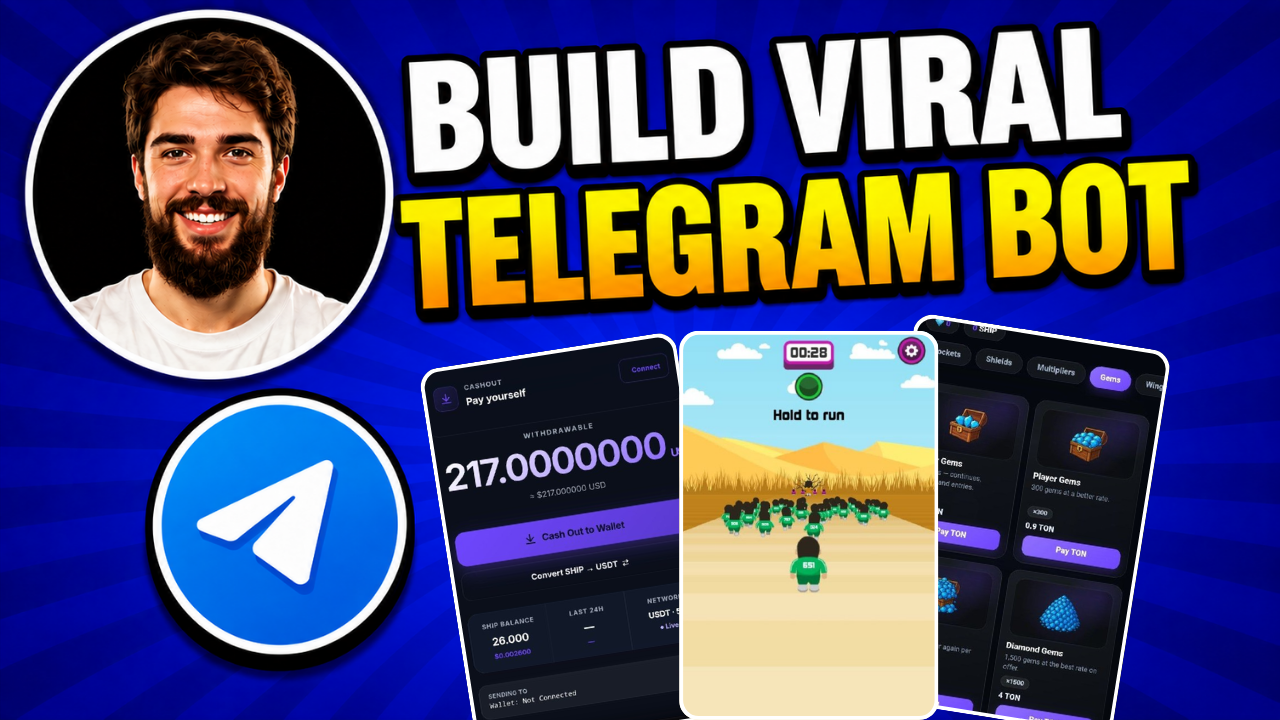
Everything in the catalogue is the third column: complete applications with the database schema, admin panel and server-side systems included, not screens. The play-to-earn app is the fullest of them; the mining bot is a smaller starting point if you want the idle-earning loop rather than tapping.
All of them are unobfuscated PHP 8 and MySQL, install through a five-step web installer with one cron line, and run on ordinary shared hosting. One-time purchase, free lifetime updates — which is the part that matters when Telegram changes something.
Common questions
Complete apps, not screens Database schema, admin panel and payouts included. Unobfuscated source, lifetime updates. Browse the catalogue |