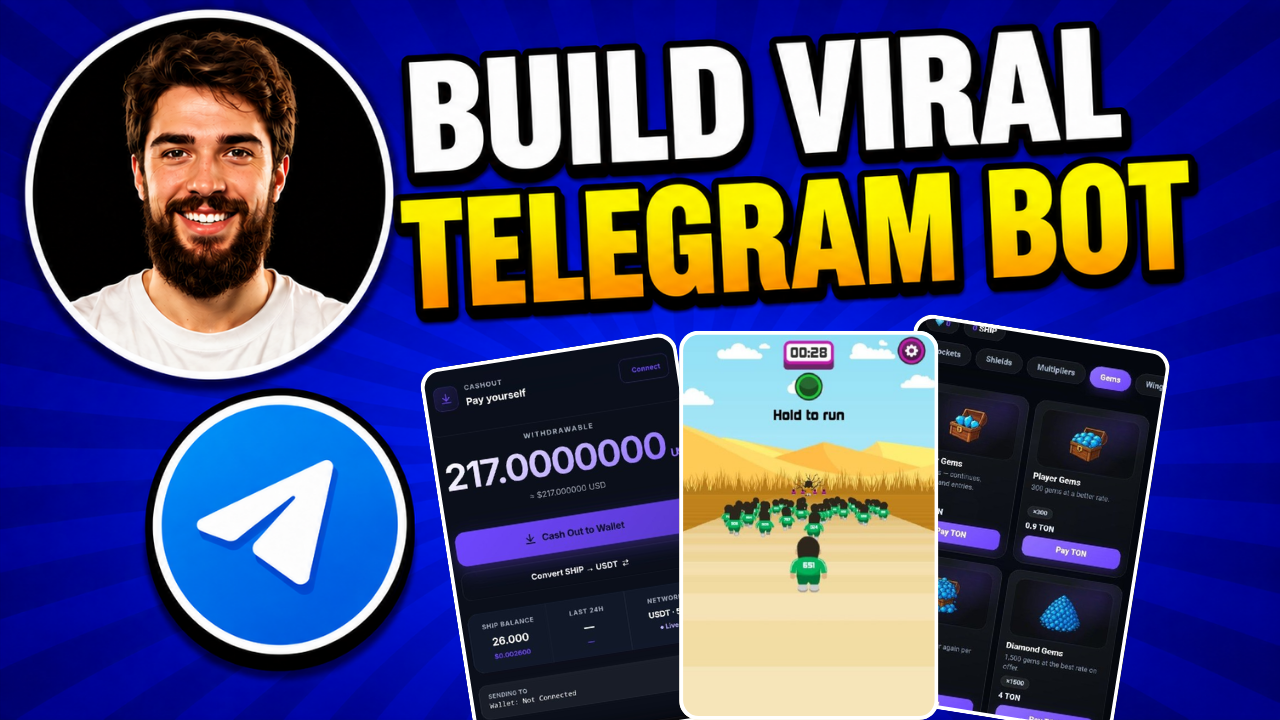
The short version: a Hamster Kombat clone is the same four-part game loop with your own branding on it. The mechanics are not protected and copying them is normal. The name, the artwork and the hamster are protected, and copying those is how projects get taken down.
What Hamster Kombat actually was
A tap-to-earn Telegram Mini App that reached roughly three hundred million users in 2024. Players tapped to earn coins, spent coins on "cards" that generated passive income per hour, and returned daily because energy refilled and combos reset. It was not technically remarkable. What it had was zero-friction distribution — no app store, no install — and a token listing at the end that gave everyone a reason to keep tapping.
That last part matters when you are deciding whether to clone it. The tapping did not retain three hundred million people. The expectation of an airdrop did.
What a clone actually includes
| System | What it does | Why it matters |
|---|---|---|
| Tap engine with energy | Balance per tap, energy cap, refill over time | The energy curve is your entire token supply schedule |
| Passive income cards | Upgrades that earn while the player is away | The reason anyone opens the app on day three |
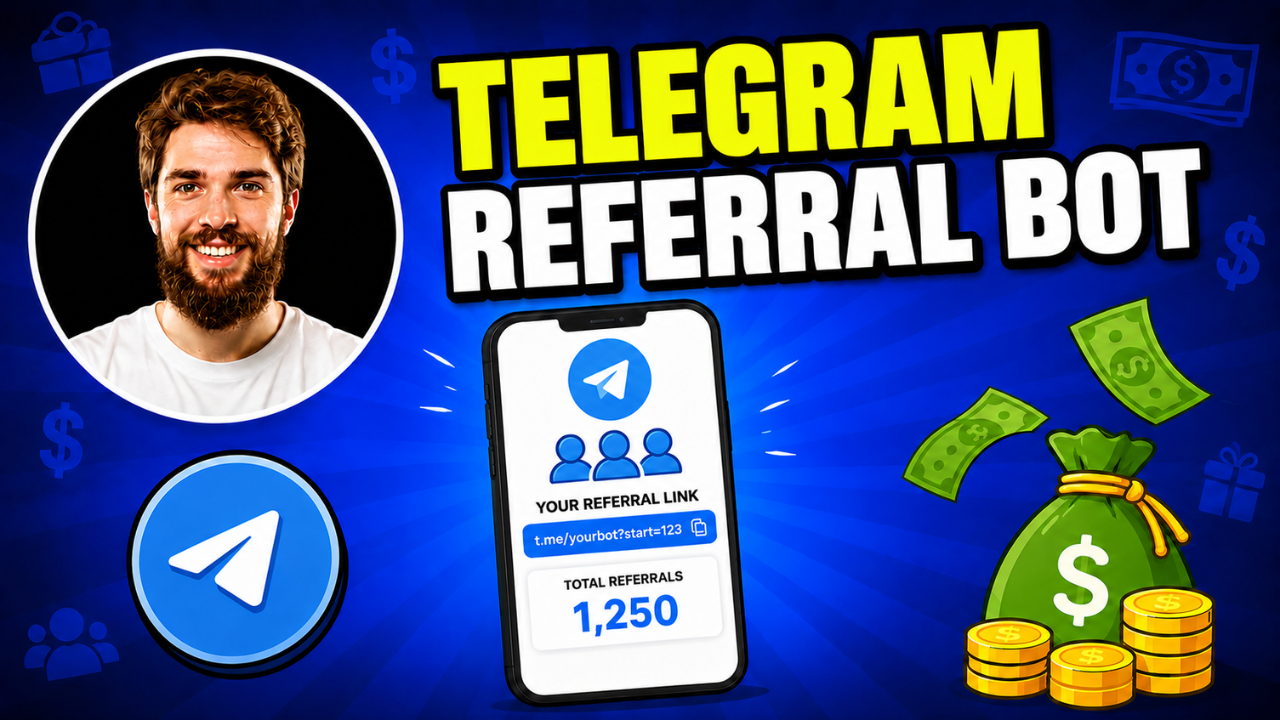
| Multi-level referrals | Invite tree with per-level rewards | Cheapest growth channel a Telegram project has |
| Daily check-in and combos | Streak rewards, rotating daily bonus | Manufactures a reason to return at a fixed time |
| Leaderboards | Global and friend rankings | Worthless unless scoring is validated server-side |
| Withdrawal pipeline | Real payouts to real wallets | The part that decides whether players trust you |
| Admin panel | Tune rates, costs, caps, tasks | You will change these weekly, without redeploying |
What it costs, honestly
Page one for this search is development agencies, and almost none of them publish a price. The pattern across the market is a discovery call, then a proposal. Here is roughly how the three routes compare.
| Route | Typical cost | Time to live | What you own afterwards |
|---|---|---|---|
| Custom agency build | $5,000–$40,000 | 6–12 weeks | Whatever the contract says — read it |
| Freelance developer | $1,500–$8,000 | 4–10 weeks | Usually the code, quality varies wildly |
| Buy a finished codebase | A few hundred dollars | Same day | The full source, if it is unobfuscated |
| Build it yourself | Your time | 2–4 months | Everything, plus the knowledge |
The gap between the first and third rows is not a quality gap. A tap-to-earn clone is not bespoke software — the loop, the referral tree and the payout pipeline are identical in every one of these projects. You are usually paying custom-build prices for something that has been built hundreds of times.
Where the real work is
Notice what is at the bottom. Anyone can build the tapping. The projects that fail do so because a client-trusted score let someone submit a million taps, or because the payout job paid the same person twice on a retry.
Is it too late to launch one?
For a standalone tapper with no audience: yes. The 2024 conditions — enormous curiosity, a token listing at the end, low competition — are gone, and a new game launched into an empty channel stays empty.
What still works is tap-to-earn as a retention layer on an audience you already have. If you run a channel, a community, a token or a product whose users need a reason to open Telegram daily, this format is one of the cheapest engagement mechanics available. The game is not the business; it is the thing that keeps the business in front of people.
Staying on the right side of the line
| 1 | Copy the mechanic, never the identity Game loops are not protected. Names, logos, characters and artwork are. Ship your own brand. |
| 2 | Do not imply an affiliation No "official", no "powered by", no borrowed marks in your listing or bot description. |
| 3 | Write your own copy and art Reusing another project’s screenshots or descriptions is the fastest route to a takedown. |
| 4 | Be careful with token promises Implying a future airdrop you have not committed to creates obligations you may not want. |
| 5 | Check your payout jurisdiction Paying users real crypto has different rules depending on where you and they are. |
The checklist that actually matters
| Ask this | Good answer | What a bad answer means |
|---|---|---|
| Is the source unobfuscated? | Yes, every file readable | You cannot fix anything yourself, ever |
| Where is scoring validated? | Server-side, with a rate ceiling | The leaderboard can be forged in an afternoon |
| Whose wallet pays users? | Yours, key encrypted at rest | Your payouts depend on the vendor staying alive |
| Are payouts idempotent? | Yes, retries cannot double-pay | A failed batch pays some users twice |
| Where do reward rates live? | Admin panel | Every economy change is a redeploy |
| What does it need to run? | PHP and MySQL on shared hosting | Docker and Redis means real monthly cost |
| Are updates included? | Free, for the lifetime of the product | Telegram changes; your code will not |
How to evaluate one in twenty minutes
| 1 | Open the demo and try to break the score Play briefly, then look at what the client sends. If the browser posts a score the server accepts, walk away. |
| 2 | Ask for a screenshot of the admin panel Not the dashboard — the settings page. You are looking for reward rates, energy caps and referral tiers as editable fields. |
| 3 | Ask exactly how a withdrawal is signed A clear answer names the wallet, where the key lives and how it is encrypted. A vague answer means it is not your wallet. |
| 4 | Ask what happens when a payout batch fails halfway You want to hear about idempotency or a transaction log. Silence means someone gets paid twice. |
| 5 | Check the install requirements before buying Docker, Redis, a build step and a queue worker are all real monthly costs on top of the purchase. |
| 6 | Ask when it was last updated Telegram’s Mini App platform moves. A script untouched for a year has drifted. |
Reading a codebase before you trust it
| 1 | Open the tap endpoint first Find where a tap is submitted. If the client sends a score and the server stores it, everything else is decoration. |
| 2 | Find the rate ceiling There should be an explicit maximum taps-per-second check. Search for it. If it is absent, the leaderboard is forgeable. |
| 3 | Trace one withdrawal end to end From request to signed transaction. Look for where the key is loaded and whether it is encrypted at rest. |
| 4 | Look for a retry guard on payouts A transaction log or an idempotency key. Without one, a failed batch pays some people twice. |
| 5 | Check the schema for referral attribution A single referrer column means one level only. Multi-level needs a tree or a path column. |
| 6 | Grep for eval and base64_decode Both are common in encoded distributions dressed up as source. |
Where the money actually goes wrong
What ShipWeb3 sells here
The Full Telegram Crypto Play-to-Earn Mini App is the complete engine: tap loop with energy, upgrades, multi-level referrals with fraud scoring, daily check-in, leaderboards, an in-app store, support tickets, and BEP-20 USDT withdrawals from a wallet you own with the key encrypted at rest. Scoring is server-authoritative with a points-per-second ceiling. Five-step web installer, one cron line, ordinary shared hosting — no container, no build step.
One-time purchase, full unobfuscated source, free lifetime updates, price on the page. We will build and deploy it for you for an optional fee if you would rather not, but the code is yours either way.